
Success story.
AI that detects drowsiness while driving: 80% accuracy based on real cockpit video
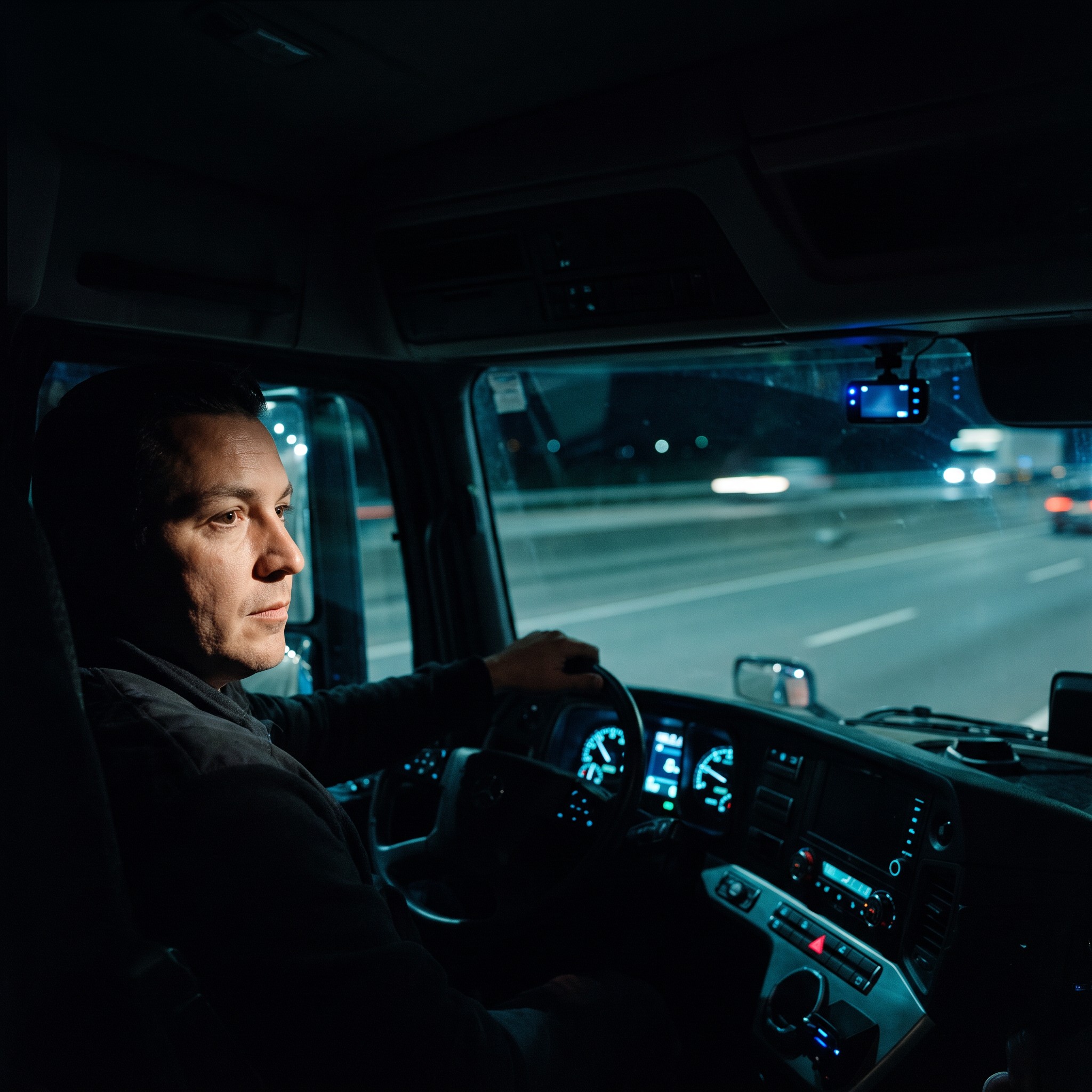
Every year, fatigue among heavy goods vehicle drivers costs lives and causes accidents. Mandatory breaks and regular inspections help, but they don't show in real time whether the driver is alert, and that risk remains.
We take on any challenge
At Zenta there are no obstacles we cannot overcome.
Challenge
To verify, technically and economically, whether a Visual-Language Generative AI model could accurately detect signs of fatigue (eye closure, yawning, head movement) on real video, keeping the cost of GPU inference under control and with an architecture that incorporated new models without re-engineering.
Solution
We designed and validated a video analytics API using Visual-Language Generative AI, 100% on Google Cloud. The event-driven, serverless architecture (Cloud Run, Pub/Sub, Firestore) uses two models: Gemini 2.5 Flash for rapid pre-assessment that discards invalid videos, and Qwen3-VL on an A100 GPU for in-depth analysis. The pipeline is idempotent and traceable, with adjustable inference parameters to balance accuracy and cost, and publishes the results via Pub/Sub for integration with the fleet's telematics system (in-cab alarms and notification to the control center). For a fleet telematics company, detecting fatigue in real time is a concrete way to prevent accidents. This proof of concept not only validated the model's accuracy but also measured the cost per analysis and response time—the data needed to make an informed decision about scaling the solution. The modular architecture allows for changing or adding models as more accurate or cost-effective alternatives become available, without having to rebuild the system. By publishing the results via Pub/Sub, the solution connects with the systems already used by the fleet, such as in-cabin alarms and the control center. The test results also provide a concrete basis for discussions with the safety and operations departments regarding alert thresholds, how to notify the driver, and the control center's response protocol.
Results from our management

Predictive accuracy of 80% or more, meeting the success criteria agreed in the SOW.

Cost per analysis from USD 0.14 to 0.50 depending on volume, within the defined viability range.

End-to-end pipeline of ~41 seconds, with only 2.23% non-productive overhead (97% is AI analysis).
Validated modular architecture: 3 tested VL models without re-engineering, with 100% traceability per request in Firestore.